RESTAURANT PAZ
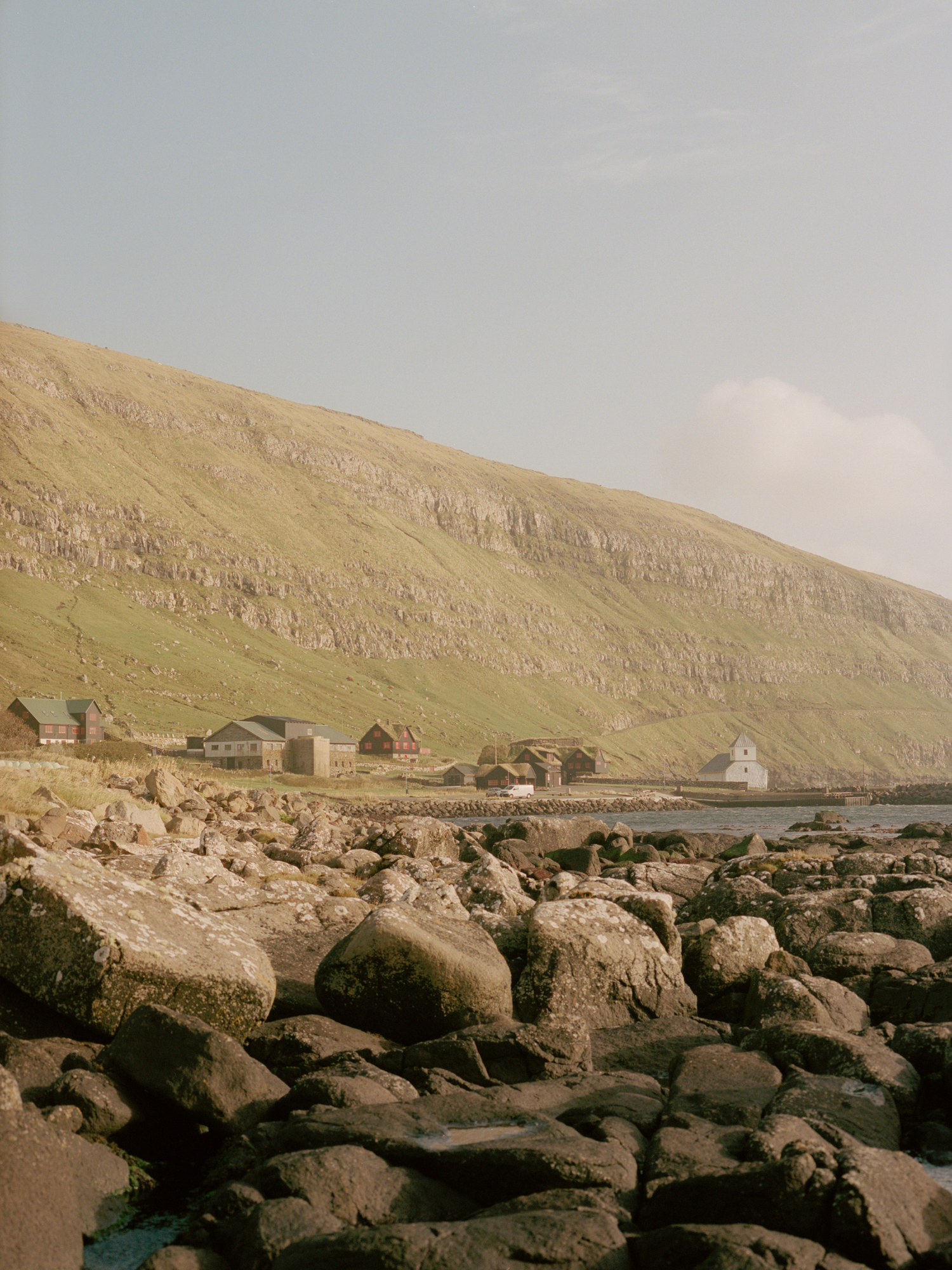
At Paz, the local carries its own story forward — where Faroese traditions, and a deeply rooted sense of place shape the interior.
After 11 years as head chef at the two-Michelin-starred restaurant KOKS, Poul Andrias Ziska opened his own restaurant in Tórshavn. Just weeks after opening, Paz received two Michelin stars and was recently named one of TIME’s “World’s Greatest Places of 2026.” His culinary philosophy remains unchanged: the pure ingredients of the North Atlantic combined with historic Faroese food traditions.
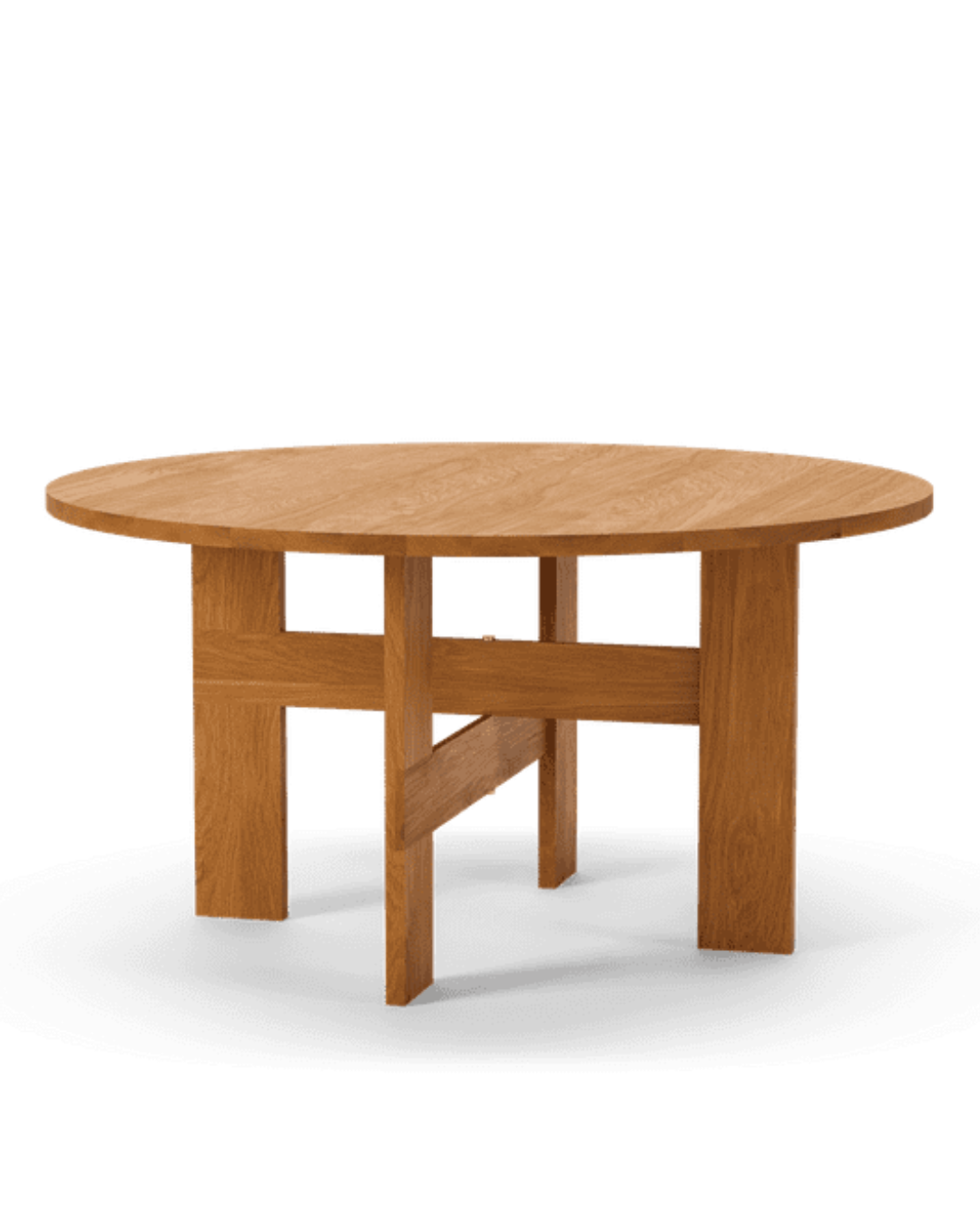
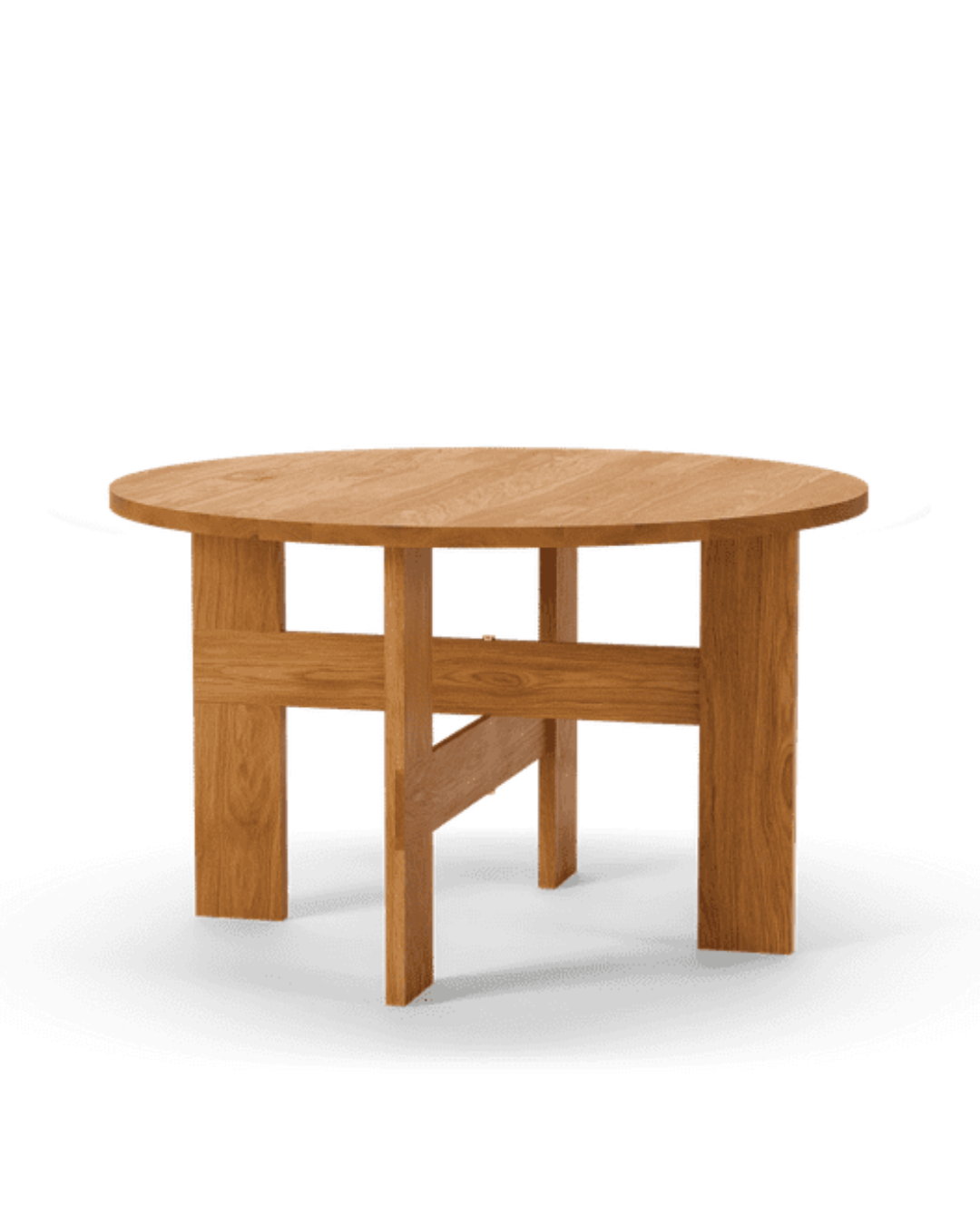
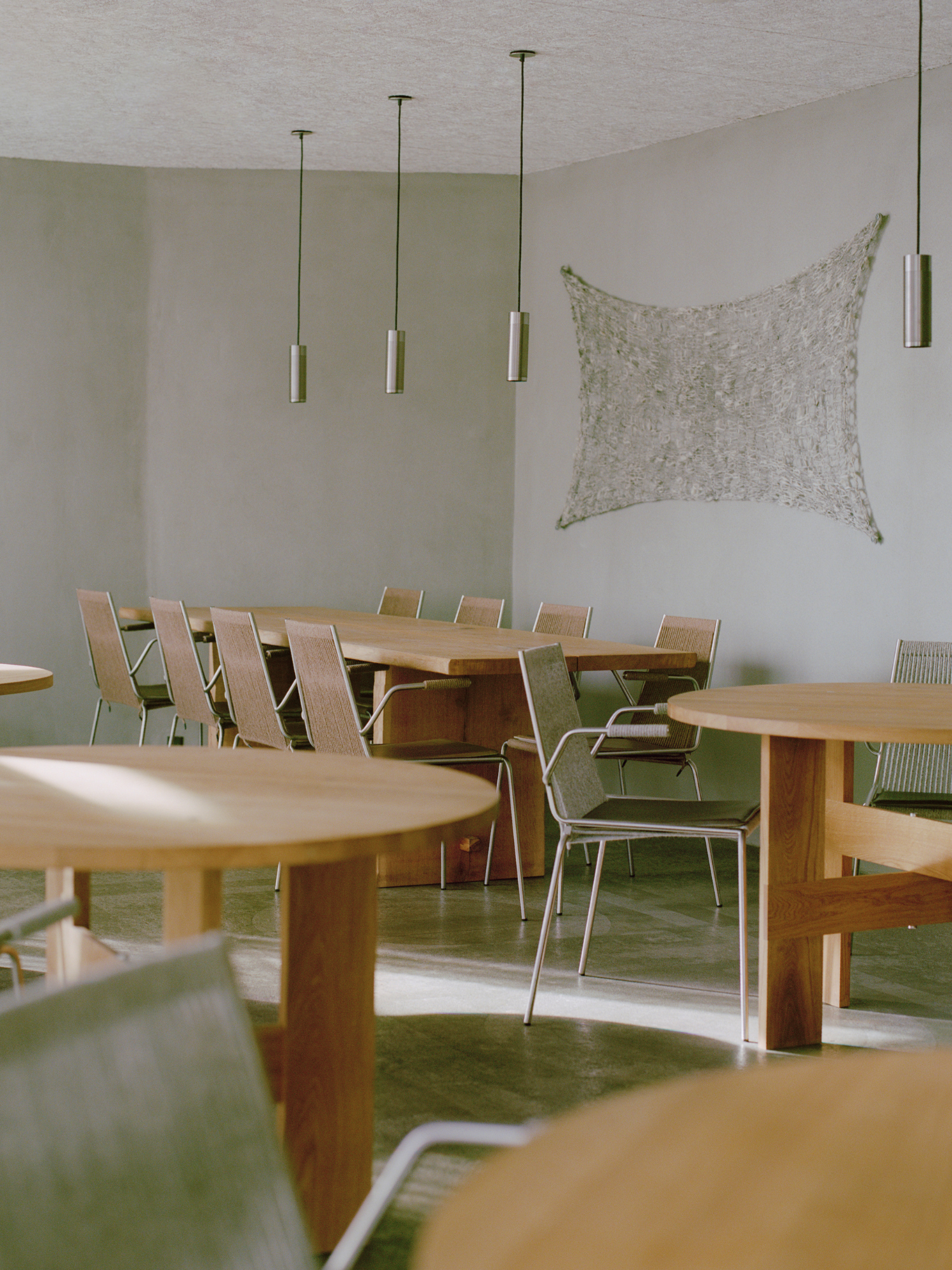
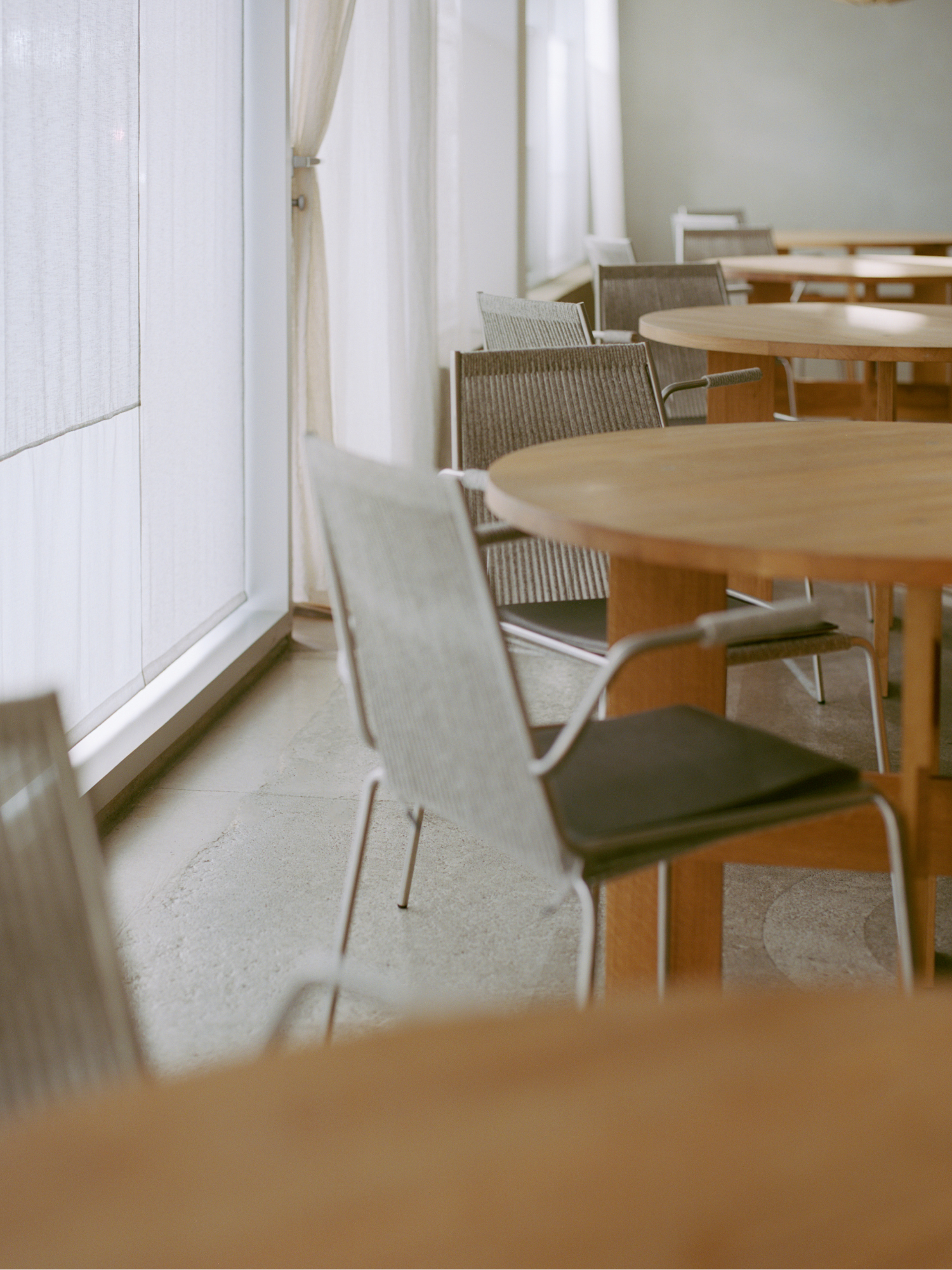
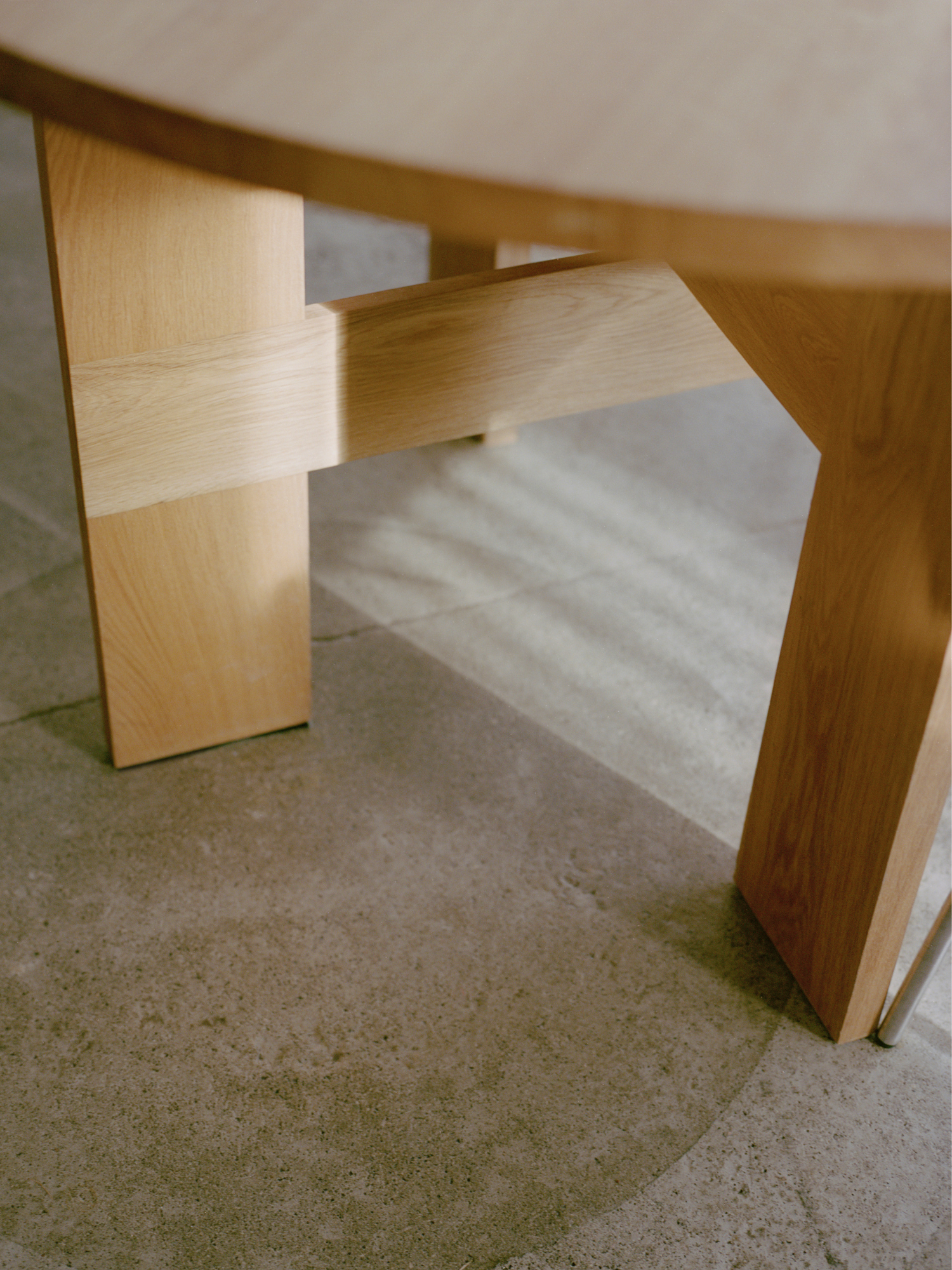
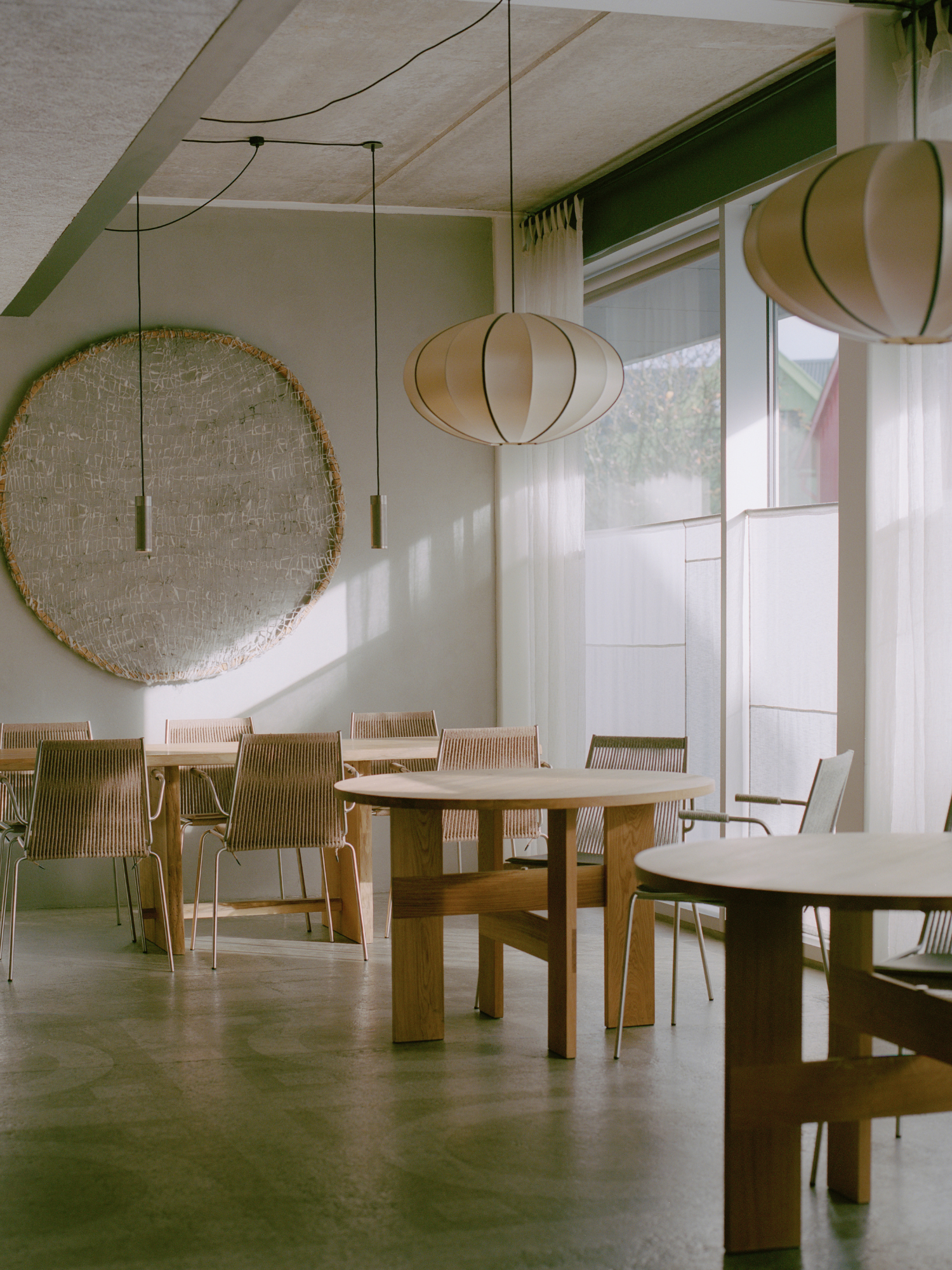
At Paz, dining is not only local—it takes place surrounded by Faroese art and ceramics created by local artists and designers, and Thorup Copenhagen completes the interior with chairs, tables, and lighting.
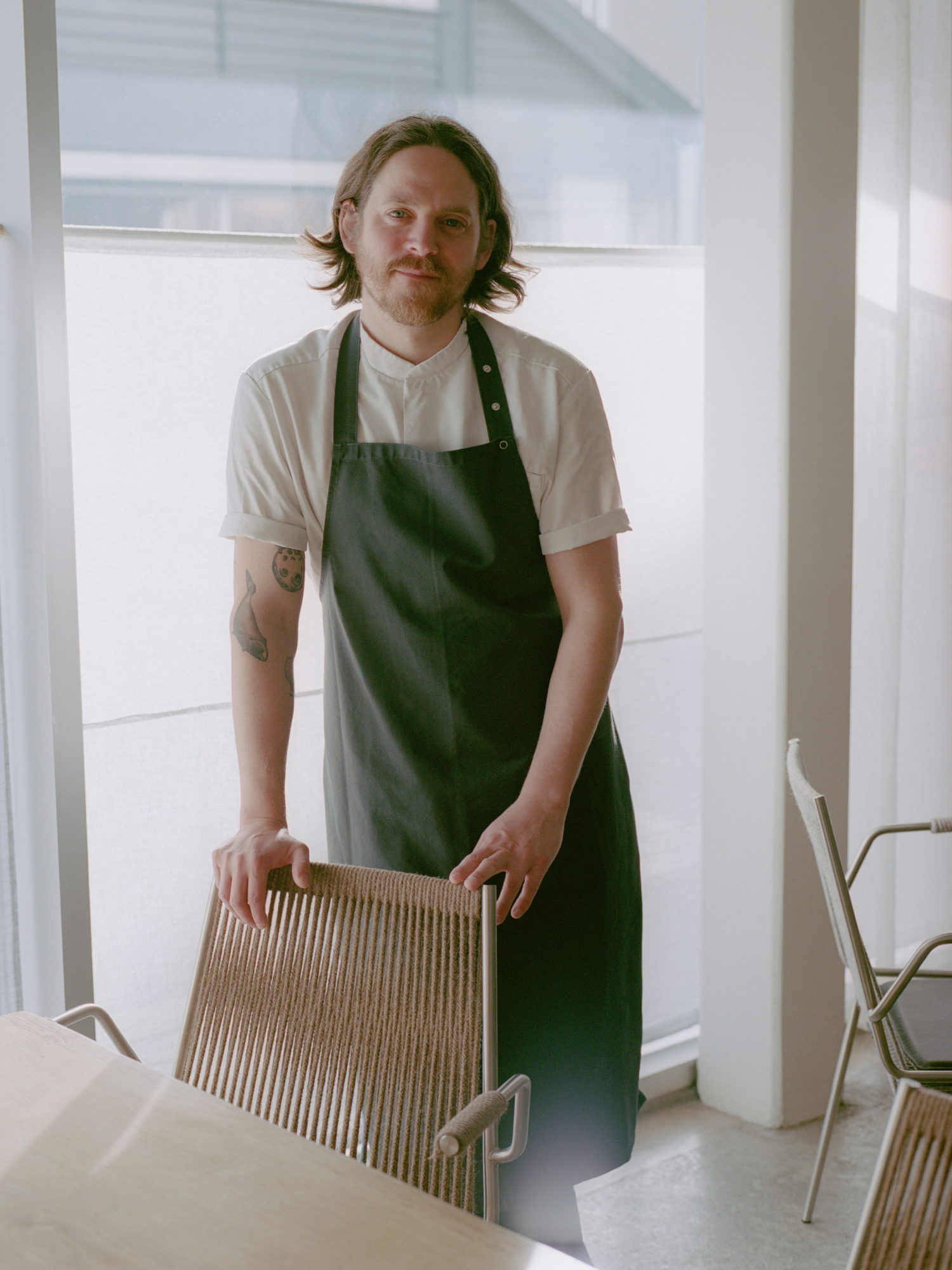
Location: Restaurant Paz, Faroe Islands
Interview: Ditlev Fejerskov
Photography: Johanna Hvidtved
Category: Hospitality
Project Partner: Stokholm
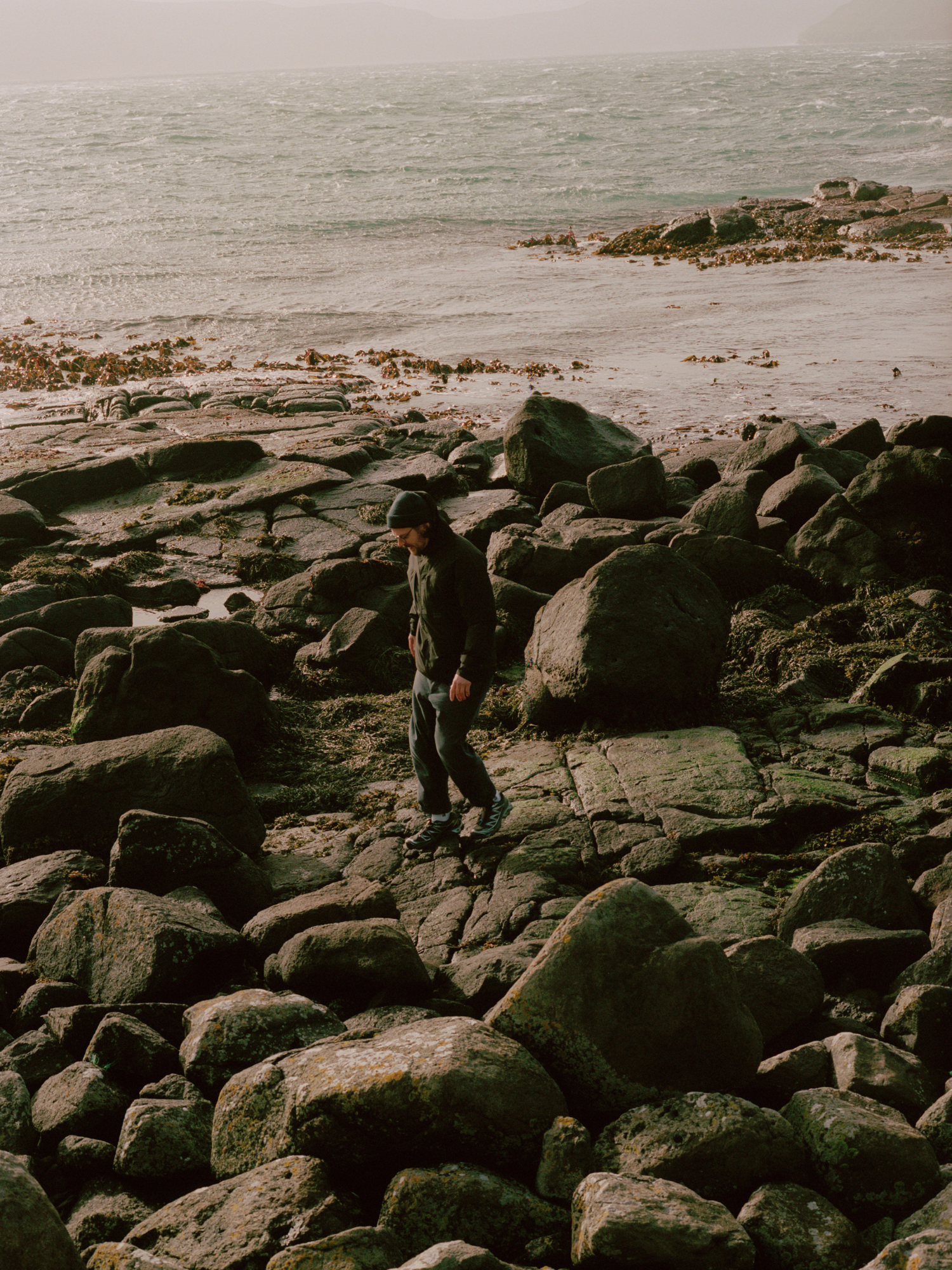
Every morning, Poul Andrias Ziska walks down to the harbour in Tórshavn to collect fish that arrived with the fishing boats earlier that same day. The quality is among the finest in the world, shaped by the cold and pristine waters of the North Atlantic.
“You can taste that freshness and purity in every single bite,” says Ziska. Paz serves a tasting menu of 16–17 courses, most of them built around fish and shellfish. The ocean is the undisputed foundation of the restaurant. To balance the delicate Flavors of the sea, Ziska works with traditional Faroese ingredients and techniques. “That’s where the uniqueness lies for us.”
Historically, the Faroe Islands have had little access to wood—there are no trees on the islands—and this has shaped the food culture. Drying and fermentation became essential preservation techniques. Fermented cod and air-dried lamb, known as skaerpekoed, are two traditions Ziska continues to explore. The lamb develops its distinctive character because it is dried in the Faroese climate inside hjallur—small wooden sheds where the wind passes through the boards and slowly cures the meat.
“You can create similar products elsewhere, but you won’t get the same flavour. The Faroese climate allows us to serve something truly incomparable,” he explains.
The identity of Paz lies in the tension between these powerful traditional flavours and the ultra-fresh seafood from the surrounding ocean. “At the same time, we are professionals and creative people,” Ziska says. “So, we also work with techniques from around the world—especially French and Japanese.”
The kitchen produces its own koji culture using pearl barley and uses sake to gently cleanse monkfish liver, removing the most pronounced fish notes. Traditional ingredients are often reinterpreted through contemporary techniques. “For example, we ferment sheep’s intestines for two months and then prepare them to use modern cooking methods. It may sound extreme, but the result is incredibly delicious.”
Seasonality in the Faroe Islands is short and begins late. Vegetables are rarely ready before August, which means Paz is not a vegetable-driven kitchen. But when they are available, the team uses them carefully and works to extend their life. Fermented leek juice, for instance, can be used in sauces throughout the year, while greenhouses provide rhubarb, herbs, and leafy greens.
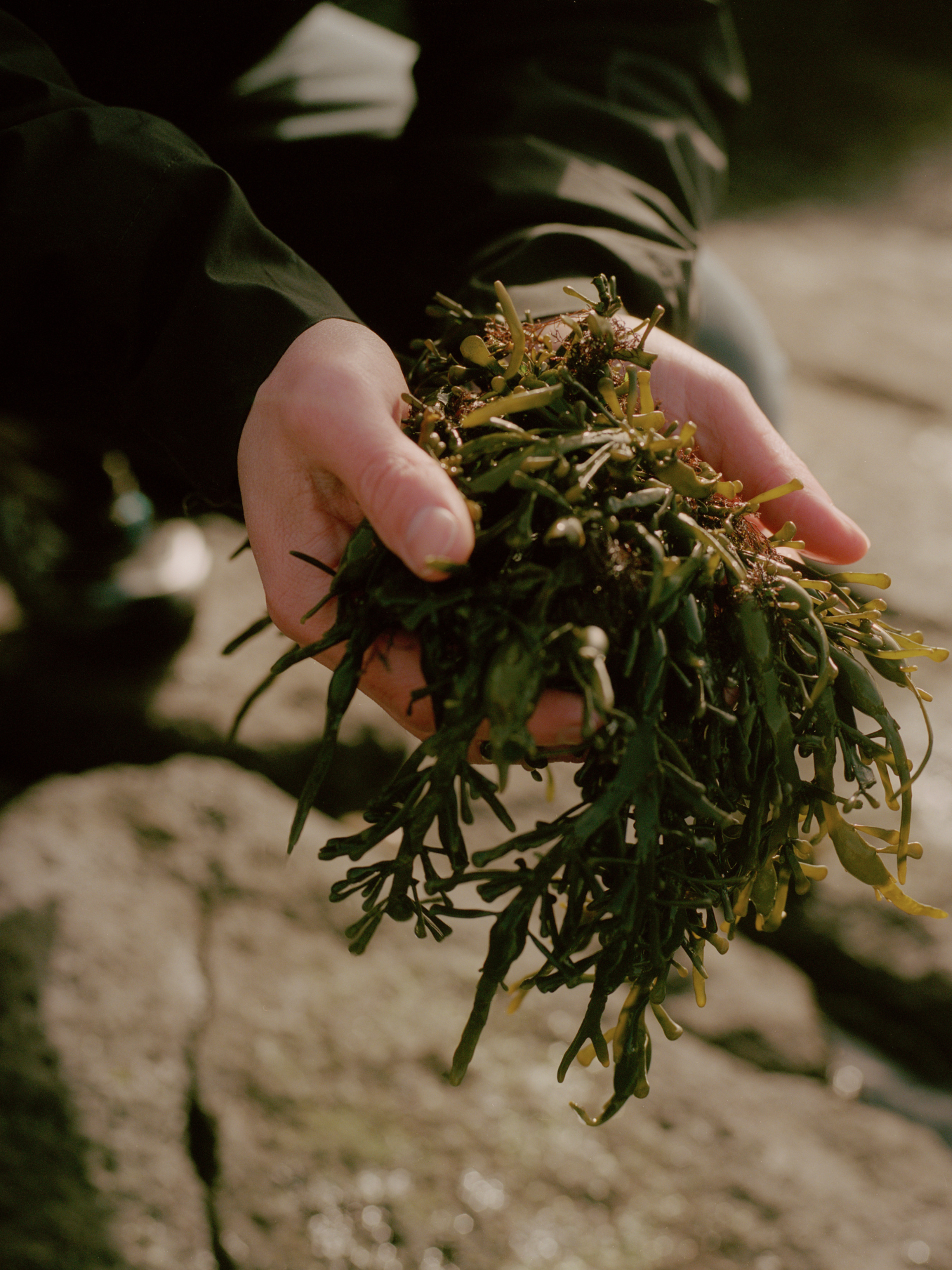
During the summer months, Ziska himself gathers wild herbs two or three times a week. “I really love doing that.”
As a Faroese native, Ziska admits he sometimes takes the islands’ nature for granted. Growing up there, it became part of him. He realized this when he once lived in an apartment without a view of the sea.
“Something felt wrong. After a few weeks I realized it was because I couldn’t see the ocean. Fortunately, you can see the sea almost everywhere in the Faroe Islands.”
Walking in nature helps him reconnect with that perspective. “It inspires me as a chef. Sometimes it’s a colour, a texture, or a landscape that eventually finds its way into a dish.”
Some ideas begin with playful experimentation. Recently, the kitchen created a dish where every element was orange. It started with fermented sweet potatoes with a tangy, almost tomato-like flavour, followed by fermented carrot juice with a sweeter profile. The dish was completed with orange ingredients such as horse mussels and trout roe.
“The flavours worked surprisingly well together, and visually it was beautiful.”
Other times inspiration begins with a single ingredient. “Yesterday a local fisherman called to say they had caught some beautiful squid. Tomorrow, I’ll have them in the kitchen and see what they can become. Maybe they’ll end up on the menu.”
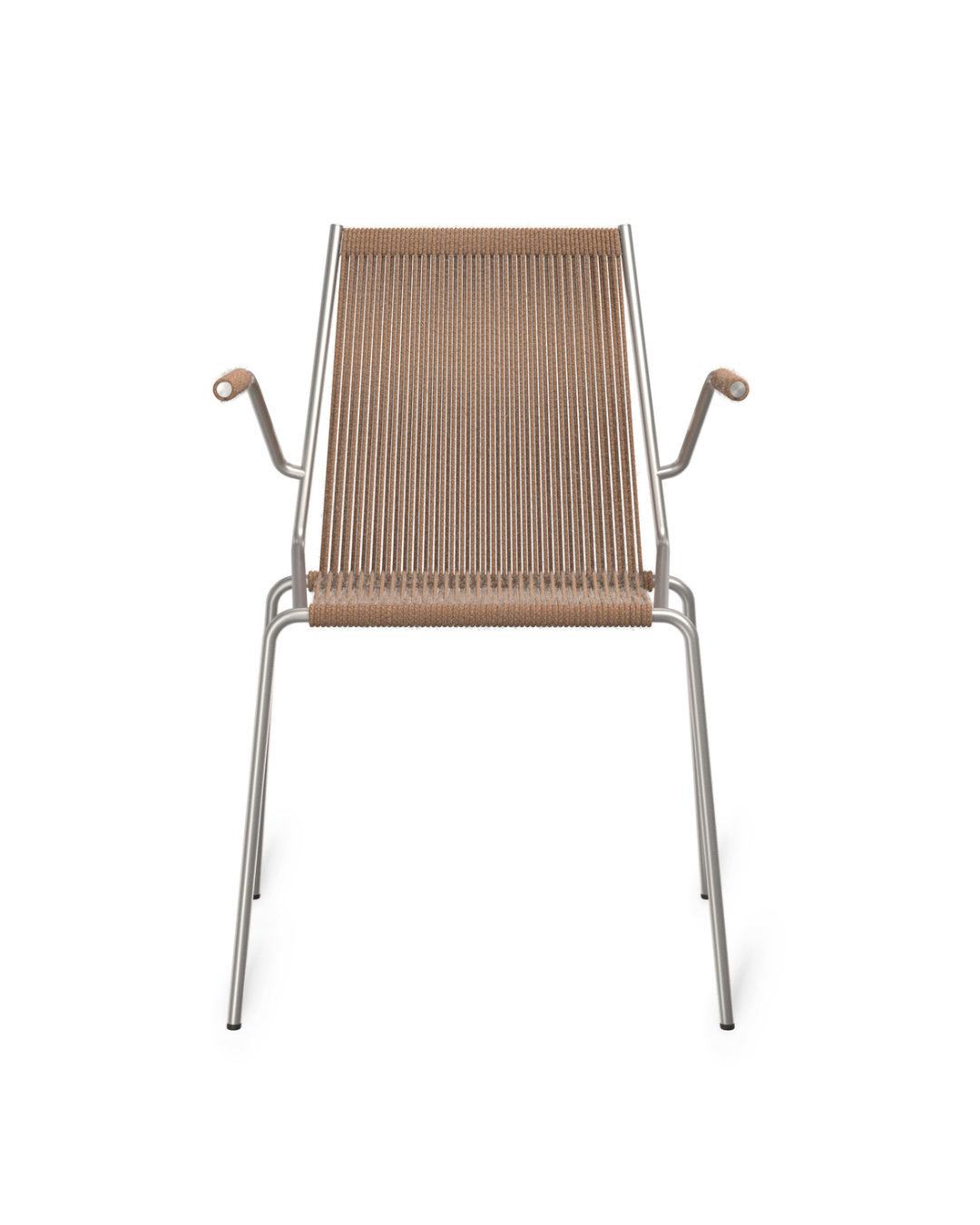
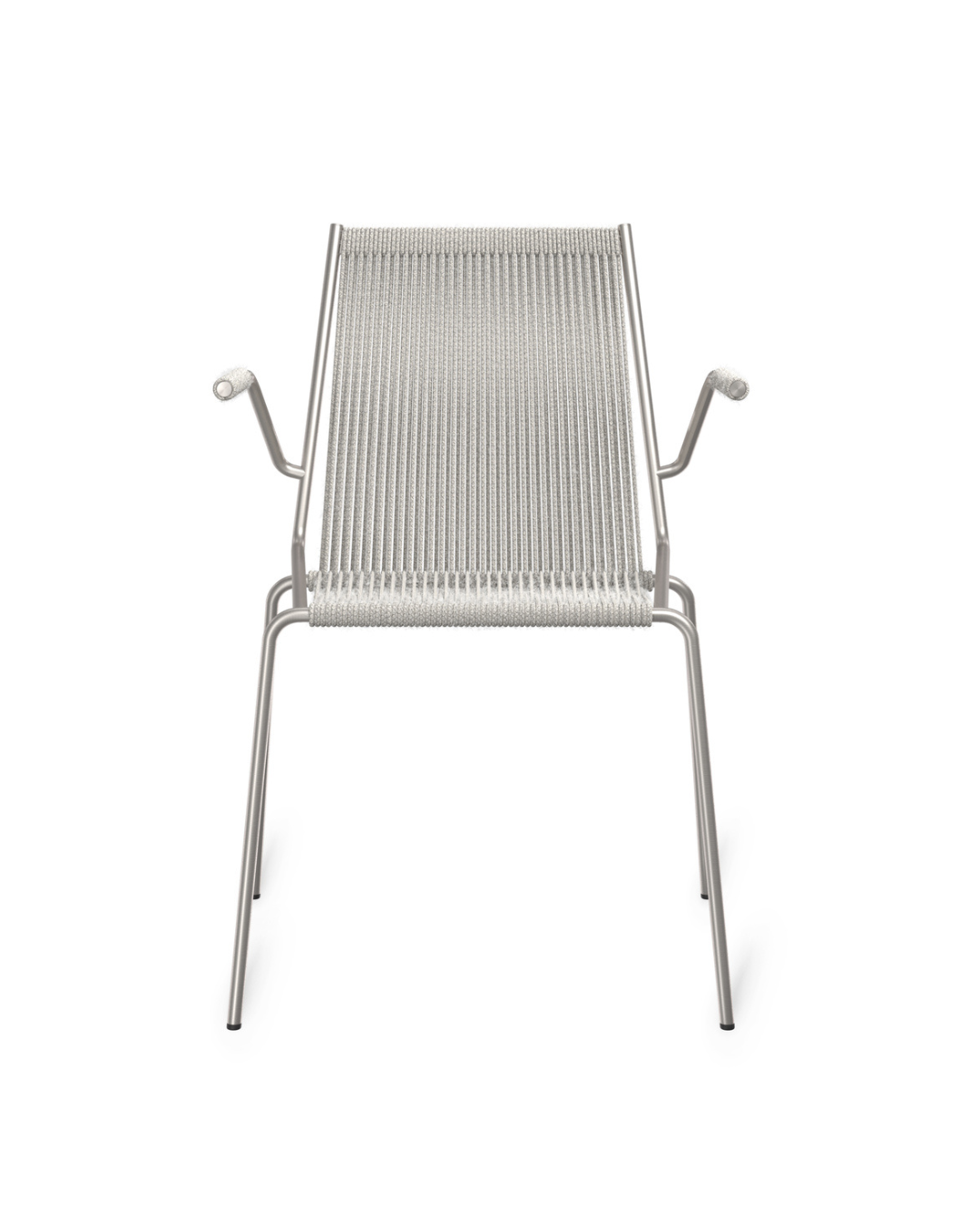
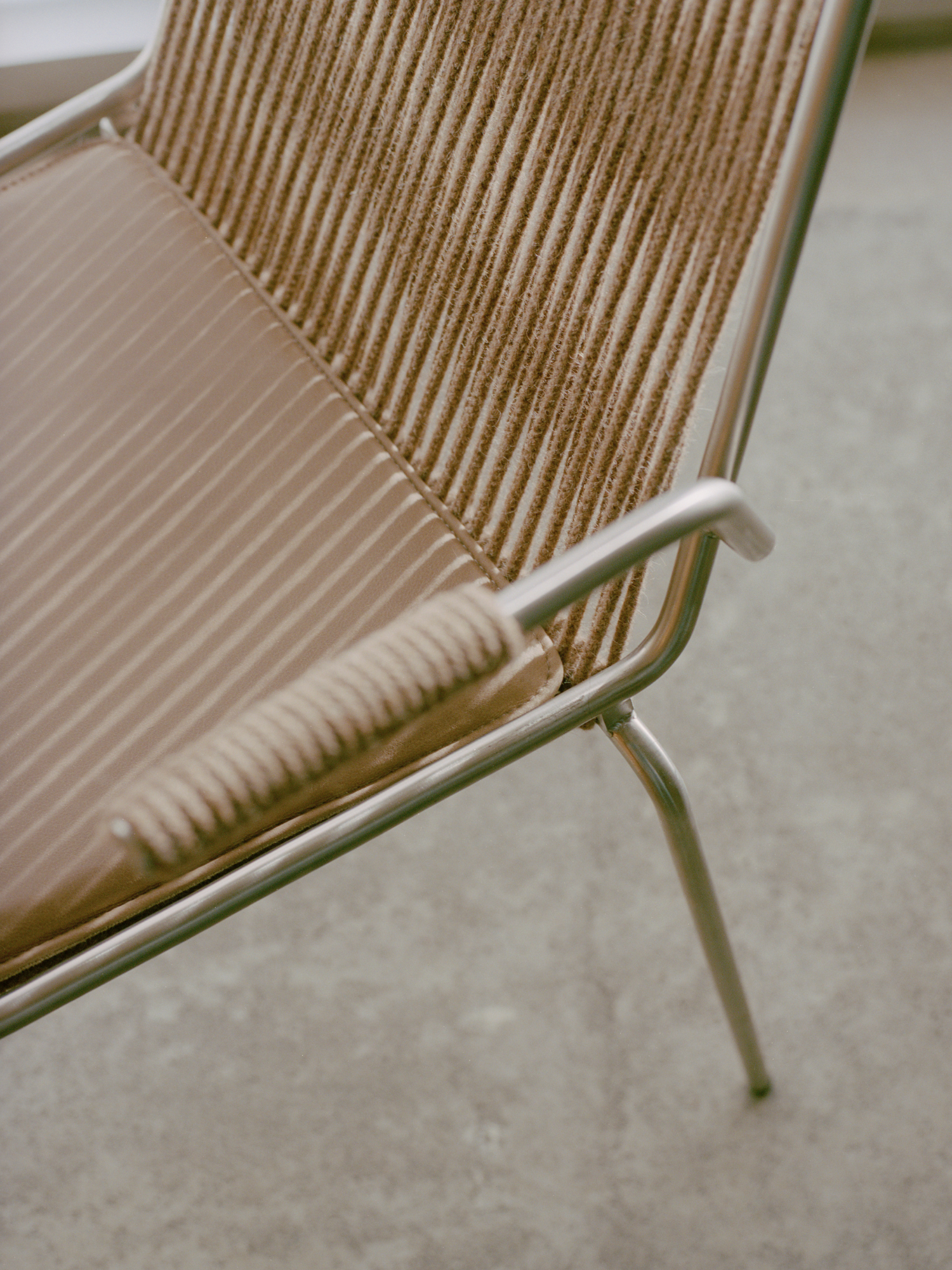
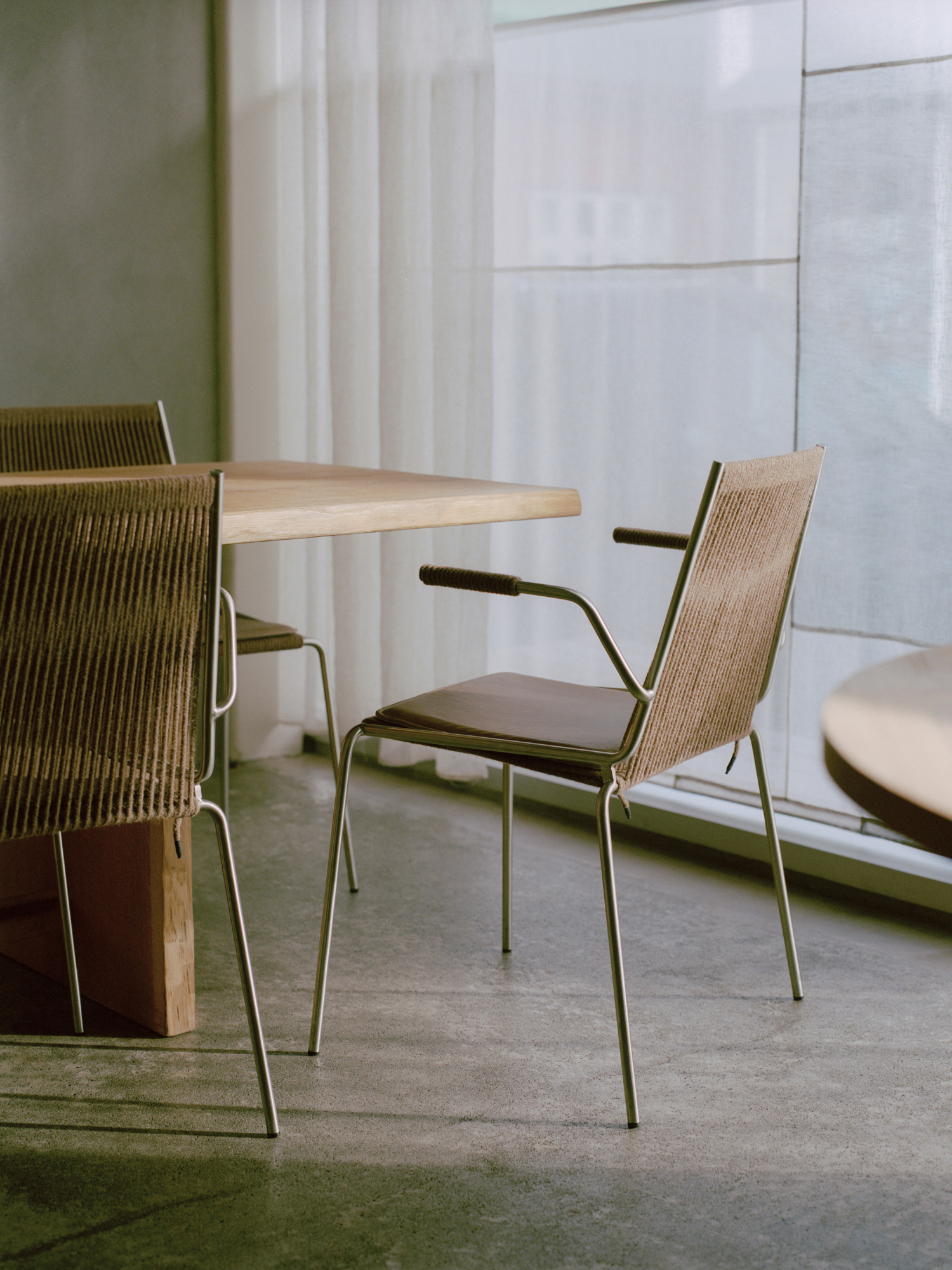
“It wasn’t until I was introduced to Thorup’s Noel chair that everything fell into place,” he explains. “The chair is minimalist and light, yet it carries a certain weight. It not only ties together the materials and aesthetics of the space—it reflects the same philosophy as our cooking.”
Just as Ziska prefers local ingredients, he also wanted the restaurant’s interior to tell a local story. A Faroese ceramicist created the tableware, while a Faroese artist composed the music played in the restaurant. When choosing furniture, he initially looked to classic Danish design— “because that’s the typical choice for a Nordic fine-dining restaurant.” But something didn’t feel right.
“It wasn’t until I was introduced to Thorup’s Noel chair that everything fell into place,” he explains. “The chair is minimalist and light, yet it carries a certain weight. It not only ties together the materials and aesthetics of the space—it reflects the same philosophy as our cooking.”
Ziska chose the Noel chair version where the seat and back are woven from Faroese wool, sourced and prepared by Faroese textile designer and artist Ragnhild Hjalmarsdóttir Højgaard. She has also created two hand-spun and knitted works that hang on the restaurant’s walls, drawing threads back to the Faroe Islands’ strong knitting and craft traditions.
Like Ziska’s cooking, Højgaard’s artistic practice is rooted in Faroese nature. Her work stems from a research project she began nearly fifteen years ago.
“I became fascinated by why we assign value to certain materials,” she explains, “and why in our part of the world we discard local resources while importing new ones from other continents.” Faroese wool is a clear example. Historically vital, it has become waste in the wake of industrialization and globalization.
“In my work, I try to bring Faroese wool back to a place where its inherent qualities and cultural value become visible again. It’s about taking what we have, where we are, and letting it carry its own story forward.”
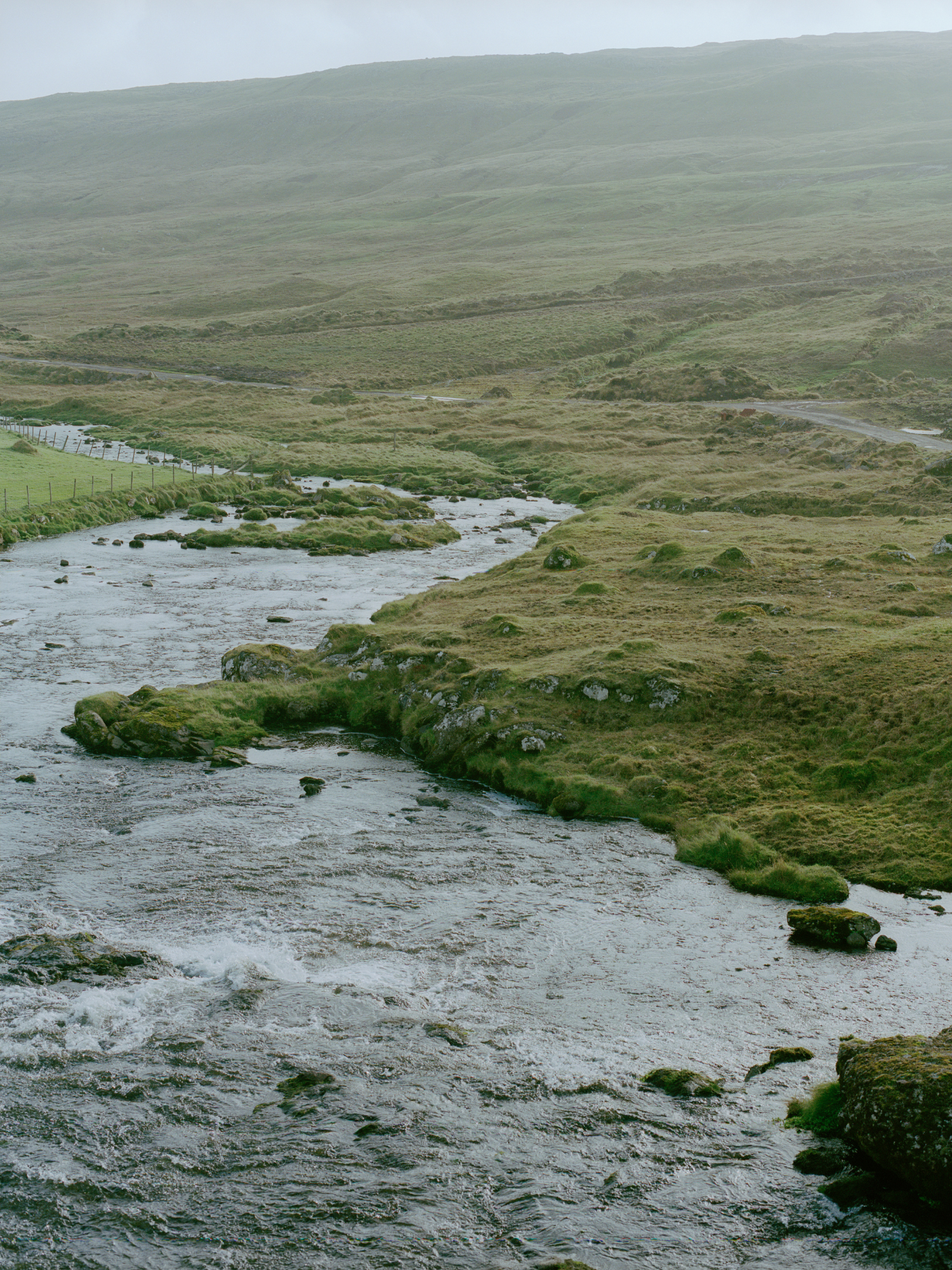
The wool used for Thorup Copenhagen’s chairs comes from sheep that roam freely in the Faroese mountains. Its quality is shaped by the landscape, the weather, and the wind. Each year around 70 tons of wool are sheared from the islands’ approximately 70,000 sheep, yet only a small portion is collected and used.
“There is still enormous untapped potential,” says Højgaard. “For me it has been important to help create awareness and real demand for the wool.”
Her collaboration with Kasper Thorup grew from a shared interest in grounding design in the logic of the material itself. Material, form, and craftsmanship are carefully considered throughout the process.
“I think the wool adds an honest tactility to the Noel series,” she says. “A warmth and rawness that contrasts with the chair’s structural steel frame and its strict lines. At PAZ, this interplay unfolds even further. It’s about honouring the material and bringing it forward making it relevant in the present.”
Shop the products featured at Paz